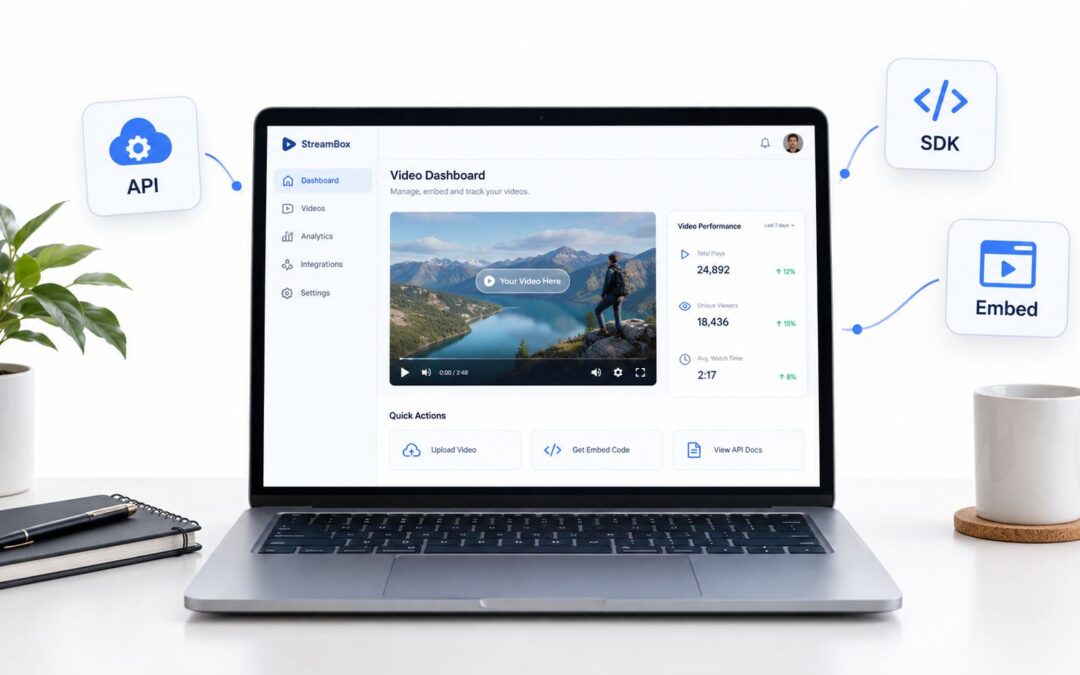
A user opens your dashboard to send an update, review a report, or complete onboarding. Then the product pushes them out to a separate video tool, asks them to learn a new interface, or makes them wait for an embed that was clearly bolted on after launch. That break feels small to the team shipping it. To the customer, it makes video look like an extra task instead of part of the workflow.
Product teams usually hit this friction long before they call it a video problem.
It starts as scattered requests. Sales wants personalized walkthroughs inside the app. Customer success wants templated onboarding videos tied to account state. Marketing wants product updates published without asking engineering to hardcode every player variation. Engineering responds with iframes, redirects, and one-off integrations. A few releases later, the dashboard has video in it, but video is not a product capability.
That difference matters. External video production is organized around assets. Embedded video for SaaS products is organized around states, permissions, events, and UI constraints. Teams stumble when they treat these as the same job. They pick a tool that can host a clip, then realize too late that they also need role-based access, branding control, embed behavior, localization, thumbnail logic, and a way to update video components without rebuilding half the front end. Wideo’s embedding options for product teams point in the right direction because the central decision is not “can we show a video?” It is “can we make video behave like a native surface in the product?”
The failure mode is predictable. Video lives outside the main app architecture, so ownership gets blurry. Product owns the experience. Marketing owns the content. Engineering owns the embed. Support handles the tickets when playback breaks on mobile, permissions expose the wrong asset, or the player loads too slowly inside a crowded dashboard widget.
Users feel all of that friction immediately.
The practical cost is not just lower engagement. Internal teams lose speed. Every update becomes a coordination problem between content changes and release cycles. Simple requests, like swapping a tutorial by plan tier or showing a different explainer after a feature flag changes, turn into backlog work. Once that happens, teams stop using video where it would help the product because each placement carries setup debt.
For SaaS companies building white label video into their own platform, the bar is higher than “embedded and branded.” The feature has to inherit the product’s logic. It has to fit existing navigation, respect account context, and stay maintainable when the team adds new use cases. If video cannot do that, it remains an attachment. Users can tell.