
In today’s competitive landscape, delivering a consistently great customer experience isn’t a bonus—it’s the baseline. For HR leaders and training managers, the challenge is clear: how do you equip your service teams with the skills to handle every interaction with confidence, empathy, and precision?
The answer lies in moving beyond static manuals and embracing dynamic, engaging video customer service training. Video transforms abstract concepts into tangible skills, showing agents how to communicate effectively, not just telling them what to say. It’s a strategic tool for building a resilient, high-performing service culture that scales with your business.
This guide provides a stage-by-stage roadmap for building an effective video training program that will elevate your team and delight your customers.

Stage 1: Onboarding → Building a Strong Foundation
A new hire’s first few weeks are a critical window. This isn’t just about learning the ropes; it’s about embedding your company’s service philosophy from day one. A well-structured video onboarding program sets the tone, accelerates learning, and ensures every new team member starts with a clear understanding of what “great” looks like.
What matters most: Consistency and connection. New hires need to feel part of the mission and receive the same core information, regardless of their location or trainer.
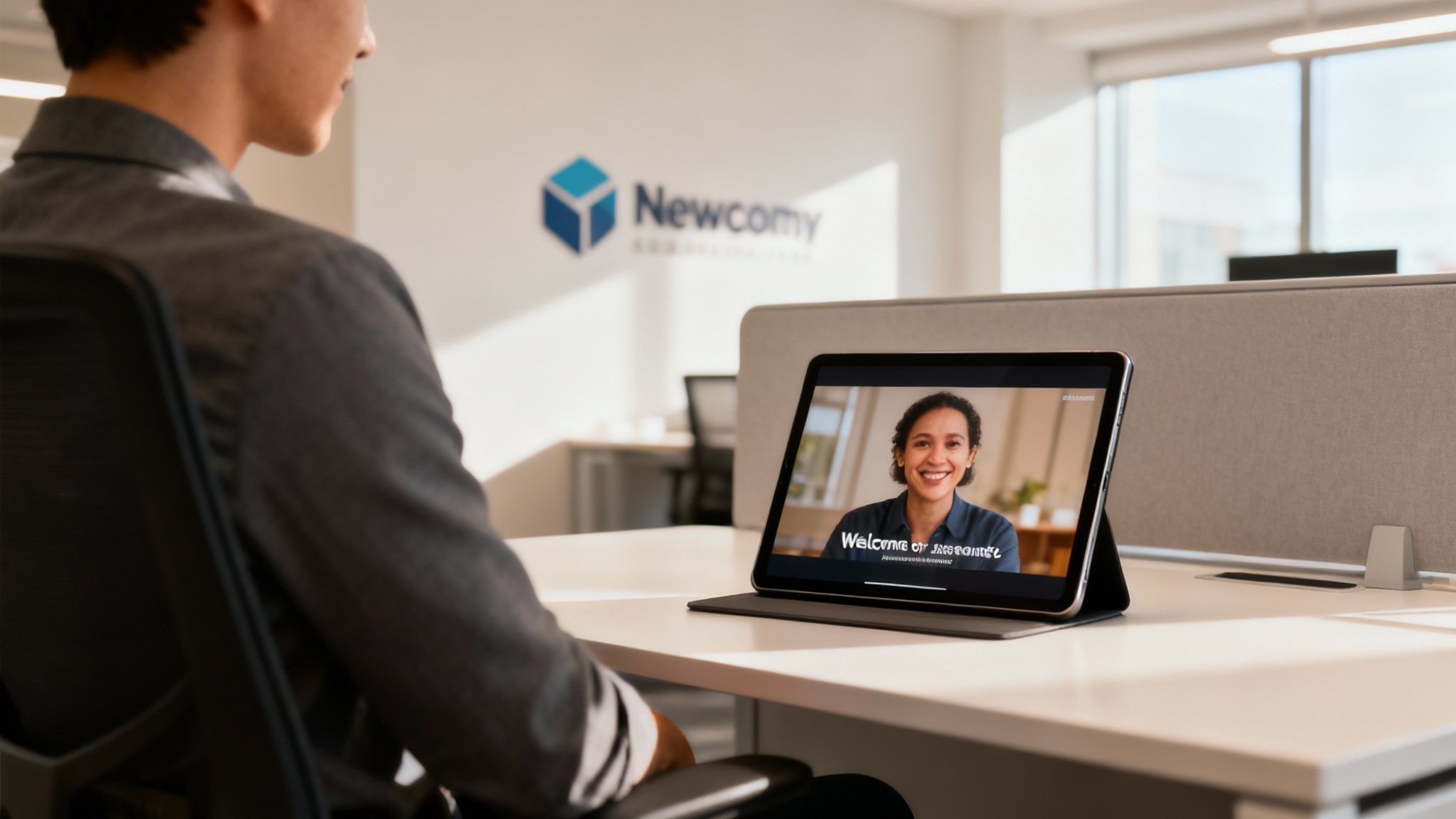
Effective Video Content for Onboarding:
- Welcome Videos from Leadership: A personal message from the CEO or Head of Customer Experience makes the company’s commitment to service feel real and important. It fosters an immediate sense of purpose.
- Animated Explainer Videos: Complex products, software workflows, and internal processes can be overwhelming. Animated videos break down these topics into simple, digestible visual lessons, ensuring everyone learns the correct procedures right from the start.
- Customer Success Stories: Instead of just listing company values, show them in action. Videos of happy customers sharing their positive experiences are incredibly motivating and provide a clear picture of the impact the new hire can make.
By creating a central library of onboarding videos, you ensure every agent receives the same high-quality instruction. This standardizes excellence and creates a unified team voice. For more ideas on using video for alignment, see our guide on how to improve internal communication with video. And if you’re looking for a launchpad, exploring employee onboarding video templates can spark some great ideas.
Stage 2: Skill Development → Practicing in a Safe Space
Once new hires have the foundational knowledge, it’s time to build practical skills. This stage is about moving from theory to application—honing the core competencies needed to handle real customer conversations with poise and expertise.
What matters most: Active learning and repetition. Agents need a safe environment to practice navigating difficult situations without the pressure of a live call.
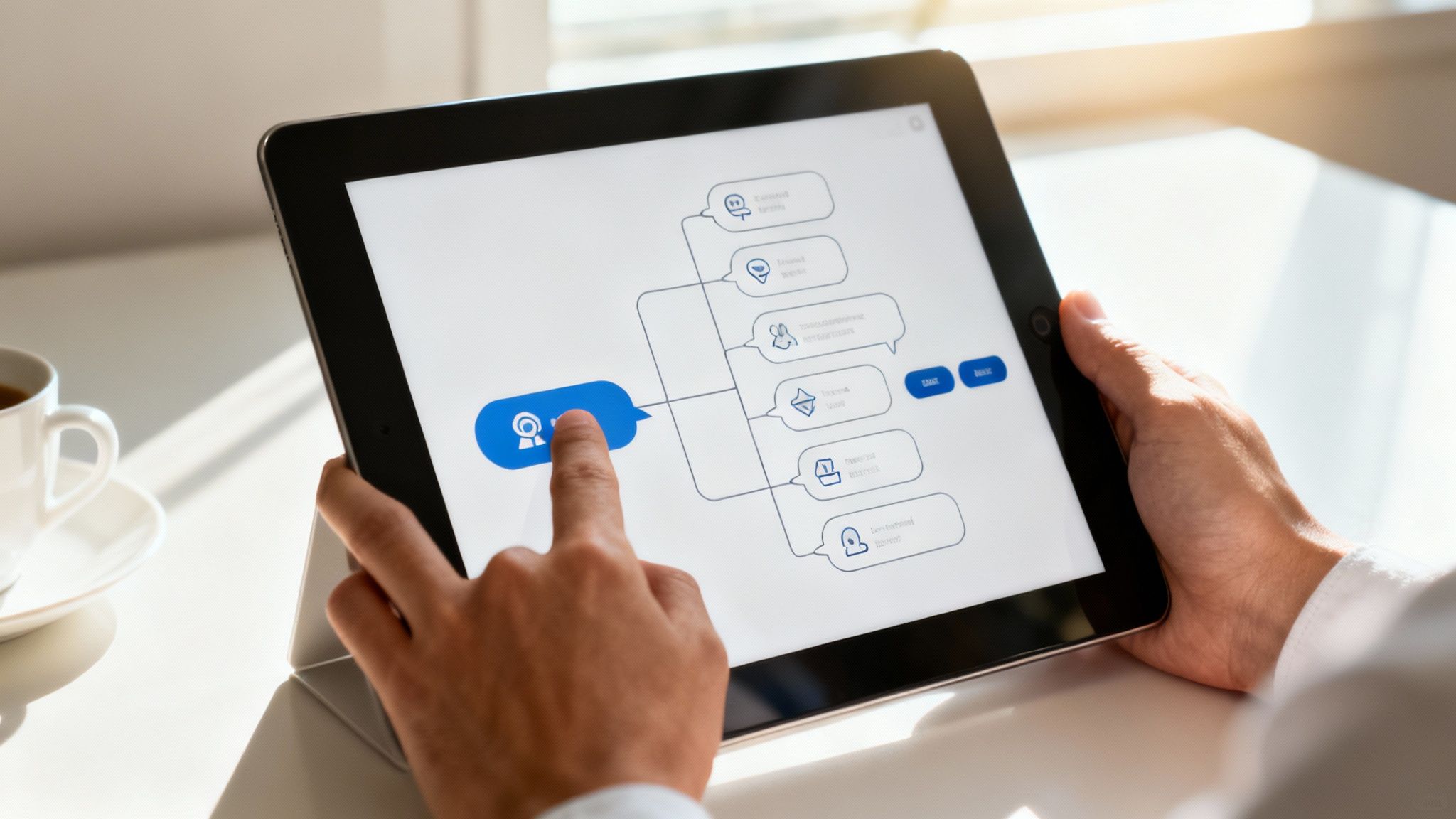
Effective Video Content for Skill Development:
- Scenario-Based Roleplay Clips: Create a library of short videos depicting common customer challenges: the frustrated user, the unhappy buyer, or the billing disputer. These clips allow agents to observe and analyze situations before they have to handle them live.
- Interactive Branching Scenarios: Take roleplaying a step further. Present a scenario, then pause the video and offer the agent multiple-choice responses. Each choice leads to a different video outcome, showing the direct consequences of their words. This creates a powerful, immediate feedback loop.
- Best Practice Demonstrations: Record your seasoned pros demonstrating key skills like active listening, de-escalation techniques, and positive phrasing. Seeing a peer successfully navigate a tricky conversation is both educational and inspiring.
This interactive approach builds “muscle memory” for handling emotionally charged conversations. It’s far more effective than reading a script, as it teaches agents to think critically and adapt their approach based on the customer’s tone and needs. Using dedicated training video software can make creating and managing these interactive scenarios much more streamlined.
Stage 3: Real-Life Scenarios → Bridging the Gap to Reality
Roleplaying is essential, but the real world is messy and unpredictable. The third stage of video training involves analyzing authentic customer interactions to prepare agents for the complex, nuanced dynamics they will actually face.
What matters most: Authenticity and critical thinking. By dissecting real calls and chats (with consent and anonymization), training becomes immediately relevant and helps develop situational awareness.
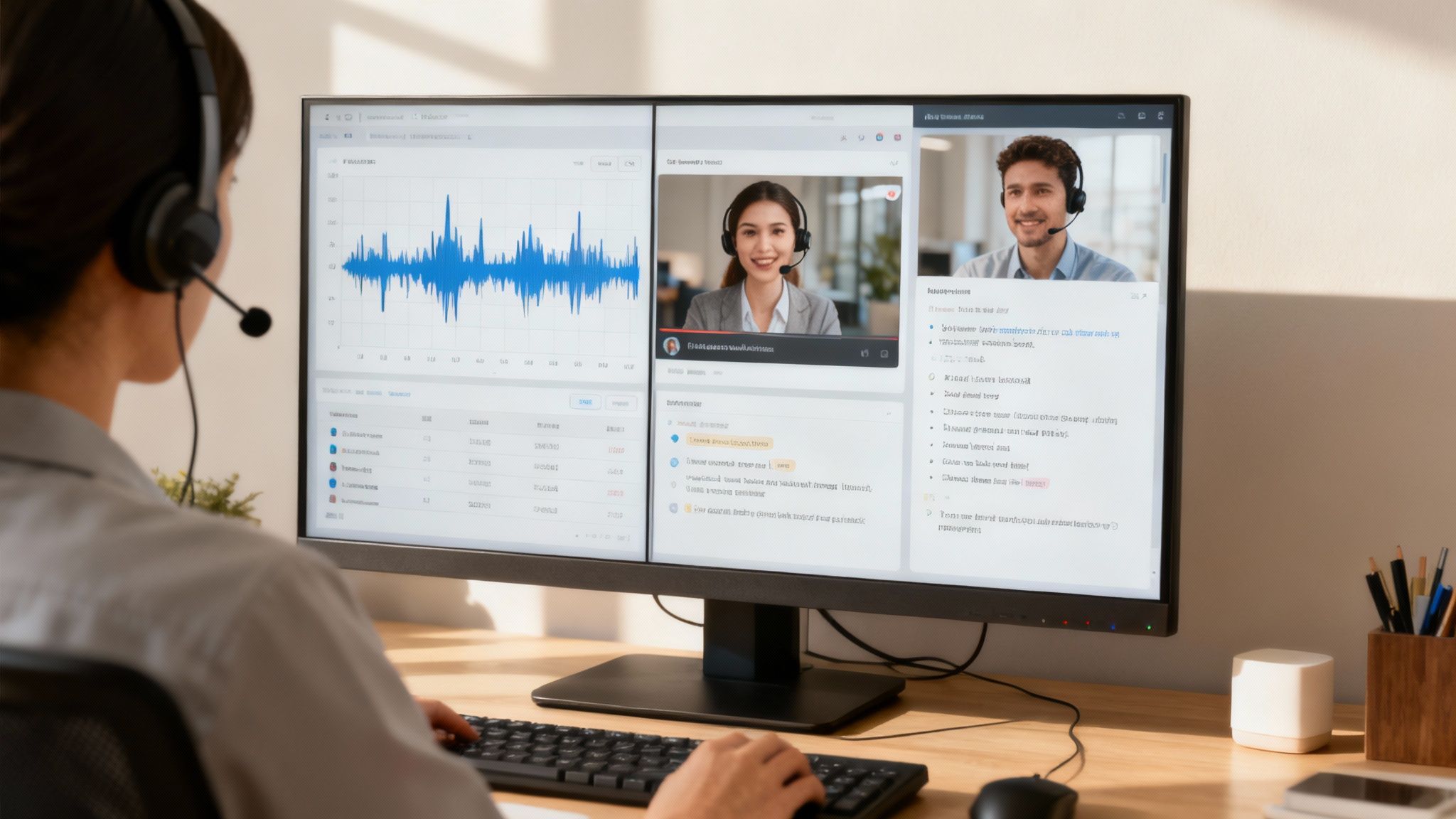
Effective Video Content for Real-Life Simulations:
- “Good vs. Great” Comparison Videos: Show two clips of agents handling a similar issue—one competently, the other exceptionally. Use text overlays to highlight the specific techniques (e.g., empathetic phrases, creative problem-solving) that elevated the “great” interaction.
- “What Went Wrong?” Analysis: In a blameless, learning-focused environment, review recordings of calls that went off track. These videos aren’t for criticism but for constructive learning, helping the entire team identify common pitfalls and learn how to avoid them.
- Customer Interaction Breakdowns: Showcase a single interaction and break it down moment-by-moment. Pinpoint where the agent built rapport, successfully de-escalated tension, or found the perfect solution. This reinforces the top customer service best practices in a practical context.
Using real-world examples transforms training from an abstract exercise into a practical guide. It builds the adaptability and empathy that define a world-class service professional. To learn more about this approach, check out this guide on a video-first support strategy here.
Stage 4: Ongoing Coaching → Driving Continuous Improvement
Exceptional customer service isn’t a destination; it’s an ongoing commitment. The final stage of your video training program should focus on continuous coaching, reinforcement, and knowledge sharing to ensure skills stay sharp and your team keeps evolving.
What matters most: Reinforcement and personalization. Training should be an integrated part of the daily workflow, not a one-time event.
Effective Video Content for Ongoing Coaching:
- Refresher Micro-Lessons: Create a library of short (under 2 minutes) videos that agents can access on demand. These are perfect for quick refreshers on a specific process, a new product feature, or a tricky compliance rule. They fit seamlessly into a busy day without causing training fatigue.
- Personalized Video Feedback: Instead of written notes, managers can record short video feedback for agents after reviewing a call. Hearing a manager’s supportive tone while they highlight specific moments is far more impactful and personal than an email. It turns feedback into a collaborative coaching session.
- Peer-to-Peer Knowledge Sharing: Empower your senior agents to record their own short videos sharing tips, tricks, and shortcuts. This user-generated content is highly authentic and fosters a culture of shared learning and collective ownership of excellence. Remember to include comprehensive captions for all video content to ensure accessibility for every team member.
This continuous loop of learning and feedback is what separates good teams from great ones. To manage this lifecycle, many teams rely on a dedicated HR solution to organize and distribute content effectively. As your library grows, maintaining consistency across a large team becomes a challenge. For organizations that need to produce personalized training content at scale, a powerful video automation solution is essential for ensuring every agent has the resources they need to succeed.
Final Thoughts
Video customer service training is more than just a new format; it’s a fundamental shift in how we build and sustain high-performing service teams. By implementing a strategic, stage-by-stage approach—from onboarding to continuous coaching—you can create a scalable and engaging program that empowers your agents, ensures consistency, and delivers the exceptional experiences your customers deserve.
Ready to build a more consistent, engaging, and effective training program? Wideo gives you the tools to create and manage high-impact video content for your customer service teams. Check out our HR solution to see how you can streamline training and onboarding today.