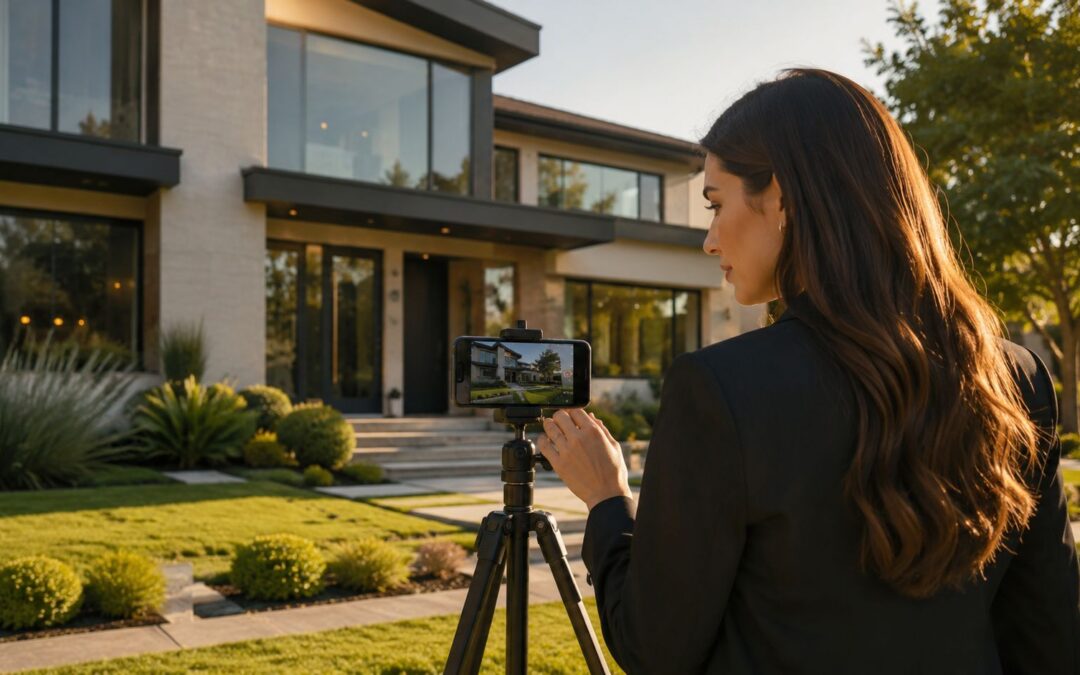
Your phone is full of property photos. Your calendar is full of showings. Your to-do list has ‘make video for listing’ at the bottom, where it’s been sitting for three weeks. Video shouldn’t be a project. It should be a system.
That gap is the problem. Buyers are voting with clicks, while most agents are still trying to squeeze one more task into an already crowded day. If you want a sharp outside view on the broader small-business case for a video-first workflow, the video strategy guide from Mr. Green Marketing is a useful read, but the issue in real estate is simpler: video has to ship every time, not just when you have energy.
The Real Estate Video Gap Buyers Notice and Agents Ignore
Real estate video marketing works because the market has already moved. Listings with video receive 403% more inquiries than listings without video, and properties with video tours sell 31% faster on average (ElectroIQ). That is not a soft branding benefit. That is buyer behavior changing at the point of decision.
The strange part is how wide the gap still is between demand and output. The same industry summaries say only a small slice of agents create listing-specific videos, while homeowners are more likely to list with an agent who uses video. Buyers and sellers are both saying the same thing, they want proof, not promises.
A good broker reads that gap as a distribution problem. A bad one treats it like a talent problem and keeps waiting for the perfect shoot day. The best ones build a repeatable workflow and stop acting like every property needs a custom film set.
Practical rule: if a listing can’t get a recorded message fast, it won’t get one at all, and that’s how opportunities disappear.
A practical resource for the same mindset is the video strategy guide from Mr. Green Marketing, because the lesson carries across industries, the team that publishes consistently wins. For agents who want to turn listing data into finished assets without living in an editor, Wideo’s personalized video tools fit that workflow cleanly.
Video Types That Actually Generate Leads for Real Estate Agents
Property walkthroughs
Walkthroughs do the heavy lifting because they answer the buyer’s real question, “Can I picture myself here?” Keep them tight, room-focused, and honest. Short walkthroughs are the highest-engagement format in this space, and the source material consistently points to video as the format that brings the most inquiries and the fastest sales.
For social, I’d keep the vertical cut short and direct. A phone-first viewer wants the floor plan feel, the natural light, the kitchen flow, and the one feature that makes the home different. Anything else is decoration.
Agent intro videos
People don’t hire a logo, they hire a person. A simple meet-your-agent recorded message works because it lowers friction before the first call, especially for first-time buyers and nervous sellers. It doesn’t need to be polished, it needs to sound like a human who knows the market.
Neighborhood and market update videos
These pieces pull in prospects earlier in the journey. A neighborhood update, a market snapshot, or a comparison between two areas gives people a reason to trust your judgment before they’re ready to tour homes. That’s useful for customer acquisition, seller education, and retention, because it keeps your name in front of people who aren’t ready today.
Client testimonial videos
Written reviews help, but a face and voice help more. Testimonial recordings work because they show relief, confidence, and emotion, which is what hesitant buyers and sellers need to see. Keep them short, and don’t script them to death.
Short-form social clips
Short vertical clips belong in Reels, Shorts, and TikTok because that’s where attention lives. Personalized video can also be used here when you need different versions for different audiences, such as buyers, sellers, or neighborhoods. That same format also fits onboarding, recruitment, and internal communication in other industries, because quick, specific messages get watched.
Buyers don’t want a content calendar, they want a reason to click.
Why Manual Video Production Breaks at Real Listing Volume
Manual production collapses under volume because every listing asks for the same sequence of work, filming, editing, text overlays, exports, and uploads. A single property piece can eat half an hour to an hour before you’ve even written the caption. Multiply that by five, ten, or thirty active listings, and the bottleneck becomes obvious.
That’s why the problem isn’t creativity. It’s throughput. Most agents know how to talk about a property, but they were never taught how to turn one listing into a repeatable series of short, useful assets across social, email, and the listing page.
A real estate video template library matters because it removes the blank page. Once the structure is locked, the work shifts from making each clip from scratch to filling in a system that already knows where the address, images, and agent details belong.
The Automated Real Estate Video Workflow From Data to Delivery

Start with the data you already have. Export a CSV from the MLS or your listing database, then include the address, price, bedrooms, bathrooms, photos, agent name, and description. That becomes the input, the same way a finance team feeds numbers into a reporting system or an e-commerce team feeds product data into a campaign engine.
Next, build one master template with placeholders for each field. Map each spreadsheet column to its matching slot, such as {{address}}, {{price}}, and {{bedrooms}}. If you need a clean idea bank while shaping the template structure, the real estate video idea library is a decent place to start, because the point is consistency, not inventing a new format every week.
Then generate the batch. One unique recorded message per listing, created from the same base template, can be routed to email, social media, the MLS, or a client portal. A team using using AI agents for keyword research as a model would recognize the pattern immediately, the workflow is data in, templated output out, then distribution based on channel.
A real brokerage can plug this into the CRM with a simple trigger. New listing enters the system, the asset pulls from the template, and the finished clip gets queued for publishing without a human sitting in an editor for hours.
How Wideo Fits as the Real Estate Video Engine
Wideo fits this model because it connects property data to branded templates instead of asking agents to become editors. The useful pieces are practical, CSV upload, Google Sheets connection, placeholders for address, price, photos, and agent name, plus bulk rendering when a team needs lots of listing versions at once. The platform also supports AI voiceover and text-to-speech, so narration doesn’t depend on someone recording every script.
That matters when teams need different outputs for different channels. A listing can be resized for 9:16, 16:9, or 1:1, while the brand kit keeps colors, logos, and fonts consistent. The no-code interface is the operational win, because agents can fill templates without touching a timeline.
For teams comparing tools, how Wideo handles real estate video marketing shows the workflow in context, but the point is broader than one product. Once the template, the data source, and the trigger are set, the team stops chasing edits and starts shipping assets.

Wideo’s AI video generator can be used inside that same flow when teams want narration and assembly handled in one place, which is the kind of setup customer success, HR, and training teams also use when they need the same message in multiple versions.
Common Pitfalls and How to Avoid Them
Overproduction wastes time. A clean 30-second vertical clip will usually do more for social than a three-minute cinematic tour nobody finishes. Design for the thumb, not the theater.
Mobile matters because most viewers are on their phones, so the frame needs to work vertically and the text has to be readable fast. Captions matter too, since many people watch muted. Missing a call to action is another avoidable mistake, because a good clip with no next step just entertains people and leaves them somewhere else.
| Real Estate Video Pitfalls and Fixes | |
|---|---|
| Pitfall | Fix |
| Overproducing | Keep the first cut short and direct |
| Ignoring mobile | Build vertical-first versions |
| No call to action | End with one clear next step |
| Inconsistent posting | Ship a good-enough asset on a schedule |
| Forgetting captions | Add captions before publishing |
If you want a simple editing layer for captions, add text to video in Wideo is the kind of utility that helps keep a program moving without turning every listing into a design job.
Consistency beats perfection when the market is moving and your listings aren’t waiting.
Measuring Success and Ending With a Question
Track listing coverage, inquiries per listing, engagement on social, production speed, and the hours your team no longer spends cutting clips by hand. That’s how you stop treating recorded messages like branding fluff and start treating them like a conversion asset, useful for sales enablement, onboarding, lifecycle communication, and reporting.
What percentage of your active listings currently has a video?