

Imagine connecting with every single customer through a video made just for them, but without filming thousands of individual takes. That’s the real power of AI video automation.
This isn’t just another tech buzzword. It’s a genuine shift for marketers who are struggling to personalize content at scale and build real relationships in an incredibly crowded digital world. If you’re already creating video, this guide will show you how to transform your strategy from a manual effort into a data-driven engine for growth.
Why AI Video Automation Is Your New Marketing Superpower
In a world overflowing with generic content, personalization isn’t a “nice-to-have” anymore—it’s what people expect. Customers want to feel seen and understood by the brands they choose.
Video has always been the king of emotional storytelling. The problem? Traditional video production makes it nearly impossible to create unique experiences for every single person in your audience. This is exactly where AI video automation steps in to create a massive opportunity.
Instead of burying your team in endless manual edits, this technology acts as a force multiplier. It takes the customer data you already have—like names, purchase history, or usage stats—and spins it into dynamic, engaging video experiences you can use across your entire marketing funnel.
Moving Beyond One-Size-Fits-All Content
The core idea is simple: turn static data points into compelling visual stories. Think of it as shifting from a single billboard ad on the highway to having a personal conversation with every driver that passes by.

This approach lets brands in all sorts of industries—from SaaS and e-commerce to finance and healthcare—communicate with a level of relevance that just wasn’t possible before.
This shift helps brands:
- Humanize Communication: Use a customer’s name, their purchase history, or loyalty status to create a video that speaks directly to them.
- Simplify Complex Ideas: Break down complicated financial reports, dense healthcare instructions, or new software features into animated explainer videos that are easy to follow.
- Build Trust at Scale: Deliver consistent, valuable, and personalized information that proves you understand each customer’s unique journey.
At its heart, AI video automation isn’t about replacing human creativity; it’s about giving it a scalable engine. It empowers marketers to run the bold, personalized campaigns they’ve always dreamed of but never had the resources to execute.
For anyone looking to brush up on the fundamentals, exploring the reasons why video is so effective for marketing can provide some great context.
The real magic happens when you combine the storytelling power of video with the incredible scale of automation. You end up creating a system that builds brand loyalty, one personalized interaction at a time.
How AI Changes the Game for Your Video Workflow
To really grasp what AI video automation is all about, you have to look under the hood. It’s not about replacing your creative team; it’s about giving them superpowers to bring ideas to life that used to be too expensive or just plain impossible.
The process starts by breaking down video creation into smaller, manageable tasks that an AI can handle. Instead of a long, linear process, AI works on multiple things at once. It can turn raw data and plain text into a polished, personalized video in minutes—not weeks.

This isn’t just about working faster. It opens up completely new ways to communicate with your audience, all thanks to a few key technologies working together.
From Text to Dynamic Visuals in a Snap
One of the quickest wins is getting more mileage out of the content you already have. Just think about all the valuable information sitting in your blog posts, whitepapers, and customer stories.
- Text-to-Video Conversion: This feature is like a smart assistant that reads your content, pulls out the main ideas, and automatically finds the right visuals and animations to build a compelling story. A 2,000-word article can be turned into a handful of engaging social media clips in no time.
- AI Voice Generation: Forget the cost and hassle of booking a studio for voiceovers. Today’s AI voices sound incredibly human. You can add a warm, professional narrator to any video in different languages and accents, keeping your brand voice consistent everywhere.
A core part of this is converting video into text, which opens up even more possibilities for subtitles and repurposing content. This back-and-forth between text and video is what makes modern automated workflows so powerful.
The Real Game Changer: Data-Driven Personalization
Turning text into a video is useful, but the real leap forward is connecting video creation directly to your business data. This is where AI stops being just a production tool and becomes a core part of your marketing strategy. It lets you create videos that are uniquely tailored to every single viewer.
How does it work? You connect your video platform to data sources like your CRM or e-commerce store.
The system takes a dynamic video template and populates it with specific customer details. Imagine an e-commerce brand sending a unique “Thank You” video to a customer named Sarah. The video could feature her name and show images of the exact sneakers she just bought.
This is what turns a simple transaction into an experience people remember. If you want to see how this works without needing to be a developer, you can check out how no-code video automation makes these powerful workflows accessible to everyone.
The table below breaks down just how different the old way of doing things is from an AI-powered approach.
Manual vs AI-Powered Video Workflows
| Process Step | Traditional Manual Workflow | AI-Automated Workflow |
|---|---|---|
| Concept & Scripting | Days of brainstorming and writing | Minutes to generate from a blog post or data |
| Asset Gathering | Hours searching stock libraries, scheduling shoots | Seconds to automatically select relevant visuals |
| Editing & Animation | Weeks of detailed, frame-by-frame work | Real-time rendering based on a template |
| Voiceover | Days to schedule studio time and record | Instant generation of human-like narration |
| Personalization | Not feasible at scale; extremely costly | Fully automated; thousands of unique videos |
| Total Turnaround | 2-4 weeks per video | Under 5 minutes per video |
As you can see, the difference isn’t just incremental—it’s a fundamental shift in what’s possible. This potential is exactly why the market is growing so fast, enabling marketers to create professional videos without needing specialized skills, putting scalability and personalization first.
Innovative Strategies to Humanize Your Brand with AI Video
Theory is one thing, but seeing AI video automation in action is what really sparks ideas. Let’s move beyond the technical “how-to” and explore some creative campaigns you can adapt for your own brand. These strategies connect automation directly to marketing goals, like reducing churn, driving repeat purchases, or simply building a stronger relationship with your customers.

The point isn’t just to make more videos. It’s to create the right video, for the right person, at exactly the right time.
1. Personalized Onboarding for SaaS and Tech
In the SaaS world, the first few days a user spends with your product are make-or-break. A confusing, one-size-fits-all onboarding experience is a fast track to churn. AI video automation can create a guided, personal welcome for every new user.
- Example in Action: A new user signs up for your project management tool. An automated workflow immediately generates a short video that greets them by name (“Hey, Sarah!”), mentions the specific plan they chose, and gives them a quick visual walkthrough of the first feature they’ll likely need, based on their sign-up info.
- Video Type: Personalized explainer and onboarding videos.
- Why it Works: It makes users feel seen from the start, preemptively answers their questions, and guides them straight to that “aha!” moment.
2. Hyper-Relevant Journeys for E-commerce and Retail
For any e-commerce or retail brand, the time right after a purchase is a golden opportunity to build loyalty. A simple “thank you” email is fine, but a personalized video is something they’ll actually remember.
- Example in Action: A customer buys new running shoes. Within minutes, they get a video that shows their name, the exact shoes they bought, offers a quick care tip, and includes a personal discount on a complementary product like performance socks.
- Video Type: Post-purchase thank-you videos and personalized product recommendations.
- Why it Works: This simple touch turns a normal transaction into a delightful moment. It shows you care about their experience beyond the sale, making them far more likely to shop with you again.
3. Simplifying Complexity in Finance, Healthcare, and Education
Industries like finance, fintech, and healthcare often struggle to explain complex information clearly. Automated video reports can translate dense data, charts, and instructions into a simple, human-centered story.
- Example in Action: A financial advisory firm automates its quarterly portfolio summaries. Instead of a static PDF, each client gets a personalized video that walks them through their portfolio’s performance with simple, animated charts, highlights key changes, and even includes a pre-recorded clip from their personal advisor.
- Video Type: Automated reports, educational explainers, and personalized updates.
- Why it Works: It makes the information easier to digest and builds tremendous trust and transparency, solidifying your role as a trusted partner.
The most effective automated campaigns don’t feel automated at all. They use data to create a sense of individual attention and care, making each customer feel like they are your only customer.
As you can see, the applications for video automation are incredibly flexible. It’s all about turning complex data into clear, compelling stories, no matter the industry. By focusing on creative ideas that solve real customer problems, you can build a video strategy that delivers results and helps you stand out.
Using Data To Tell Human-Centered Stories
A common worry among marketers is that more automation will make their brand feel distant and, well, robotic. But with AI video automation, the opposite is true. This technology gives your creative ideas a scalable platform to tell more human, data-driven stories.
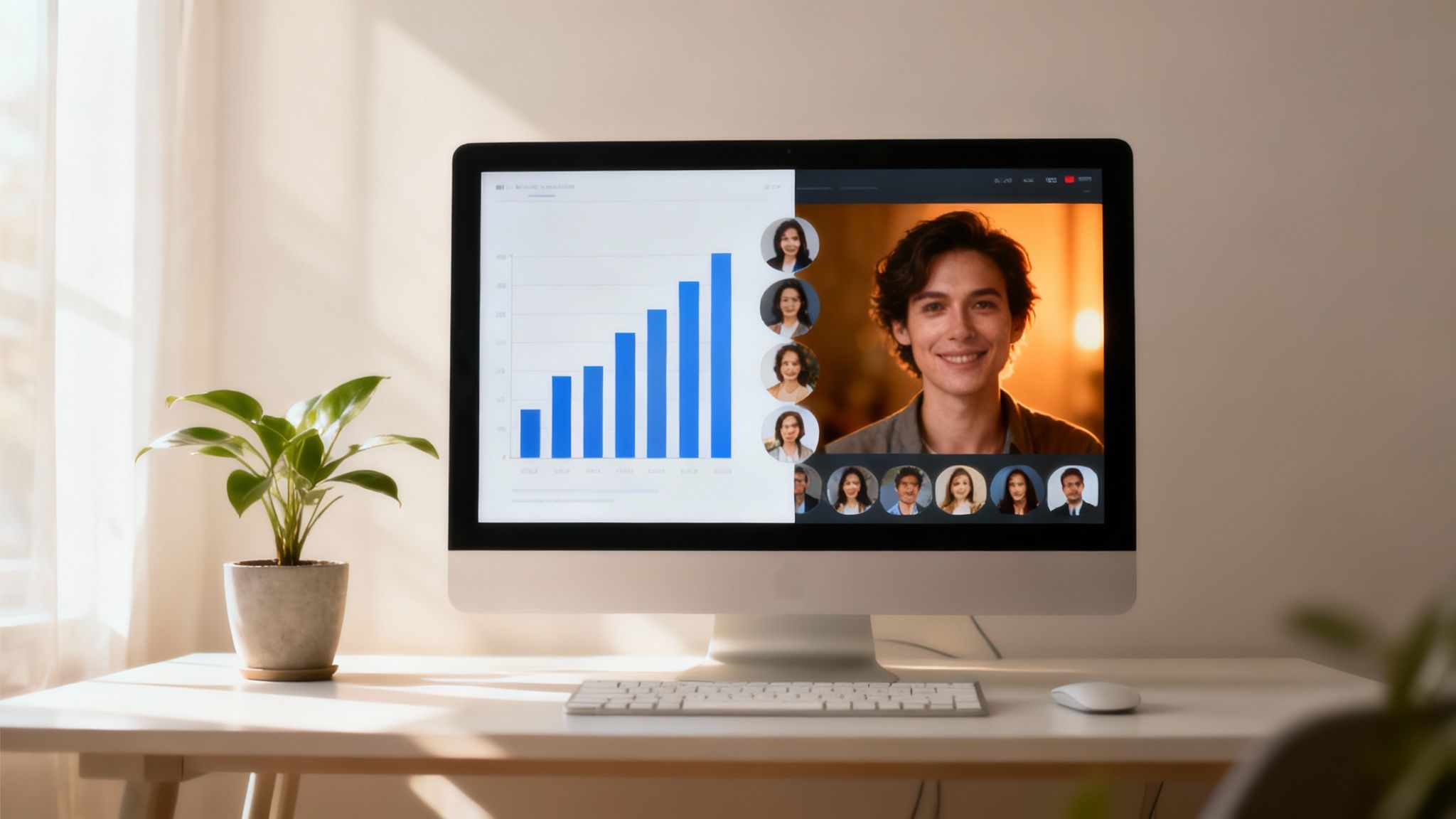
Instead of replacing the human touch, AI amplifies it. Imagine connecting your customer data directly to a video creation engine. Suddenly, you can generate authentic, personal messages that connect one-to-one, even when you’re sending them to thousands.
Turning Data Points Into Personal Connections
The secret to human-centered storytelling is relevance. A message feels human when it acknowledges who we are and what we’ve done. With AI video automation, you can use real customer data to build narratives that reflect their unique journey with your brand. This lets you move way beyond generic stock footage and create social media content based on real user scenarios or craft deeply personal messages for individual customers.
Here are a few powerful ways to make this happen:
- Personalized “Year-in-Review” Videos: Celebrate loyal customers by automatically creating a video that sums up their year with your brand. A fitness app could highlight their biggest achievements, while an e-commerce store could showcase their top purchases.
- Automated Milestone Celebrations: Trigger videos to celebrate customer anniversaries or when they hit a key goal. A SaaS company sending a video to congratulate a user on their 100th completed task is a powerful way to reinforce their success.
- Dynamic Onboarding Sequences: Create a welcome video that mentions the specific product a customer just bought and guides them with information that’s directly relevant to their needs from the very start.
By focusing on the story behind the data, you transform a simple transaction or interaction into a memorable brand experience. Automation becomes the tool that delivers a moment of genuine connection, not just another piece of marketing content.
Acknowledging the Challenges: Brand Voice and Data Privacy
As you scale personalization, two big challenges emerge: keeping a consistent brand voice and handling data privacy. Automation without clear guidelines can lead to off-brand messaging, and mishandling data will erode customer trust in a heartbeat.
- Brand Consistency at Scale: To keep your brand voice intact across thousands of videos, create strong, flexible templates. Lock down your brand assets (logos, colors, fonts), write base scripts that reflect your brand’s tone, and use a consistent AI voice that aligns with your persona.
- Navigating Data Privacy: Personalization requires data, but you must use it responsibly. Be transparent with customers about how you use their information to improve their experience. Always follow data protection regulations like GDPR and CCPA, ensuring you have explicit consent.
Platforms designed for this, like those offering secure video automation, provide the right infrastructure to handle data responsibly. They let you connect your CRM or other data sources through secure APIs, so you can build trust while delivering the personalized, human-centered stories that modern audiences expect.
Implementing Your AI Video Automation Strategy
Getting started with AI video automation isn’t about becoming a tech wizard overnight. It’s about smart, strategic planning. The process begins with a clear idea of what you want to accomplish. By setting specific goals and knowing which data to use, you can build a scalable system that delivers measurable results.
First, define your objectives with laser precision. A vague goal like “increase engagement” won’t cut it. Your objective could be to improve email click-through rates by 20% by using personalized video thumbnails, or to reduce new user churn by 15% with an automated onboarding sequence. Clear goals are your North Star.
Start with a Focused Pilot Project
Trying to roll out a massive, company-wide strategy all at once is a recipe for overwhelm. A smarter approach is to start small with a manageable pilot project. This lets you prove the concept, iron out any wrinkles, and show some quick wins to stakeholders without committing a ton of resources upfront.
An e-commerce brand, for instance, could run a pilot focused only on post-purchase thank-you videos for a single product line. A SaaS company might automate just the first welcome video in their user onboarding flow. The key is to pick a project with a clear, measurable outcome.
Identify Your Key Data Sources
Think of your data as the fuel for your AI video automation engine. The good news? You don’t need a perfectly organized data warehouse to get going. Just start by identifying the most accessible and high-impact data sources you already have.
Common sources include:
- Customer Relationship Management (CRM): The essentials, like names, company details, and purchase history.
- E-commerce Platforms: Real-time info on orders, products purchased, and abandoned carts.
- Product Analytics Tools: A goldmine of insights into user behavior, feature adoption, and key milestones.
The goal is to connect these sources to your video platform, turning static data points into dynamic elements for your video stories.
Choosing the Right Automation Platform
Picking the right technology is a huge piece of the puzzle. You need a platform that feels like a partner in your growth, not a technical roadblock.
Look for a solution with:
- Robust Integration Capabilities: It must connect smoothly with your existing tools (CRM, email platform, etc.).
- High-Quality Template Variety: A deep library of professionally designed and easy-to-tweak templates will get your campaigns out the door much faster.
- Scalability and Performance: The platform has to be able to generate thousands of unique videos without breaking a sweat, all while maintaining quality and speed.
A successful implementation really comes down to a platform’s ability to make complex things simple. The right tool gives your marketing team the power to launch sophisticated, data-driven campaigns without needing a whole team of developers.
Platforms built for this level of work are designed to handle these demands. As a practical example of how this can be applied, a solution like the one offered by https://wideo.co/video-automation/ shows how you can connect your data and start generating personalized videos right inside your existing workflows, turning your strategic plan into a reality.
Final Thoughts: Embrace Bold, Scalable Storytelling
AI video automation is more than just a productivity hack; it’s a strategic shift toward more personal, relevant, and human-centered marketing. By combining the emotional power of video with the precision of data, you can build stronger relationships, simplify complex ideas, and create memorable experiences that drive real business results.
The key is to start with a clear goal, focus on a pilot project, and choose the right tools to bring your creative vision to life at scale. It’s time to stop the manual grind and turn your video strategy into an automated engine for growth.
Related posts:
 Ai Avatar Mastery: Create Your ai avatar for Marketing
 A Practical Guide to AI Avatar Generator Tools
 AI Productivity Isn’t About Speed. It’s About Eliminating Work.
 Your AI Analytics Are Smart. But Are They Understood?
 AI Integration A Practical Guide for Business Growth
 How AI Assistants Accelerate Team Video Creation


