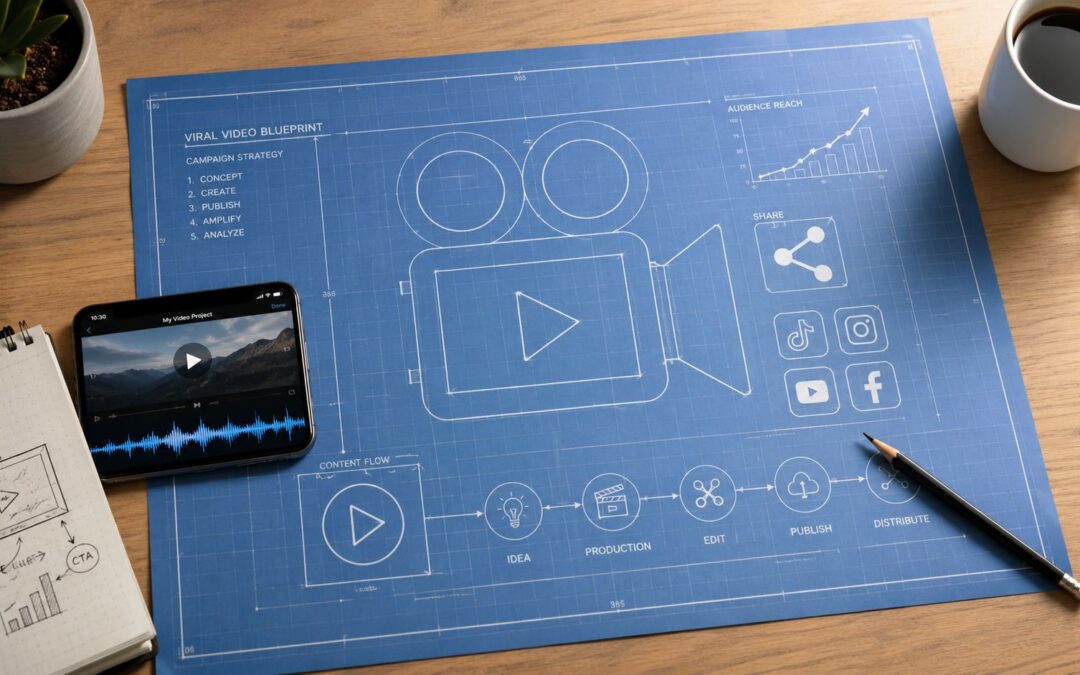
Most advice about video marketing viral gets the job wrong. It tells brands to chase attention when they should be building a repeatable system that turns attention into pipeline, onboarding clarity, customer retention, and faster internal execution.
Virality isn’t a creative accident anymore.
Teams use visual content because the market has already shifted there. Business adoption of video marketing rose from 61% in 2016 to 91% in 2026, 95% of companies now call it important, and 85% of consumers say a brand’s video has convinced them to buy, according to Siege Media’s roundup of video marketing statistics.
Stop Chasing Virality Start Engineering Value
Most brands still treat viral success like a scratch ticket. That thinking produces flashy clips, weak follow-through, and almost no operational value after the first spike in views.

The better question is simpler. What would make someone share this dynamic asset because it helps them do something, explain something, or look smart to someone else? That shift changes everything for ecommerce teams, SaaS marketers, insurance advisors, HR leaders, and customer success managers.
Reach is cheap, usefulness travels
Major platforms increasingly reward retention and engagement over simple clicks. YouTube has said recommendations are driven by viewer satisfaction signals, not just raw view count, and Meta has emphasized original, engaging visual content in ranking systems. That means a niche recorded message can spread inside the right audience if it creates trust or utility, even when it isn’t broadly entertaining.
Practical rule: A viral clip with no business fit is noise. A widely shared asset that answers a real buyer question becomes infrastructure.
A finance brand can publish a short animated explainer about how compound interest works and see it passed between spouses or coworkers. A real estate team can create a concise walkthrough on how to prepare for a home appraisal, then reuse the same audiovisual piece in lead nurture, sales conversations, and post-signup education. An HR department can turn policy updates into short internal clips that people watch instead of ignoring in email.
This is why one-off production fails so often. A single clip rarely covers acquisition, sales enablement, onboarding, lifecycle communication, and internal alignment all at once. The smarter model is a library of assets designed for specific decisions and moments, which is also the logic behind why one video isn’t enough for your business.
What companies should engineer instead
A useful viral system starts with business intent, not platform vanity. In practice, that means asking whether a piece should drive shares, saves, replies, demo interest, policy understanding, fewer support questions, or cleaner executive reporting.
One sentence can make the difference between empty reach and business relevance.
A travel company doesn’t need a funny airport skit if what moves revenue is a short, shareable recorded message showing what travelers should pack for a specific route and season. An education provider may get more durable results from a student FAQ series than from trend-based clips. A media brand may care most about watch behavior because that distribution signal extends the life of every future post.
The Viral Blueprint From Audience Insight to System
Teams that keep asking for “a viral video” usually have a planning problem, not a creative one. High-performing programs start by identifying where video can shorten decisions, answer repeat questions, and reduce manual work across the business.
Start with moments, not formats
Useful video systems are built around recurring moments. A buyer compares options. A customer hits a setup issue. A prospect stalls after a proposal. A manager needs to explain a policy change. Those moments create repeat demand for the same core message, which is what makes a content engine scalable instead of fragile.
A car dealership shows the difference clearly. Generic walkarounds rarely help a shopper make a decision. A stronger approach maps clips to real questions: what changes between trim levels, how charging works on an EV, what to inspect before a test drive, how financing terms affect monthly cost, and which features matter for a family versus a commuter. One set of assets can support paid acquisition, salesperson follow-up, delivery-day education, and service reminders.
Useful content travels because it solves a question people share with someone else.
The same pattern works in SaaS, healthcare, education, and nonprofit marketing. A product team can convert recurring support issues into a searchable tutorial library. A customer success team can send milestone-based updates that explain the next action clearly. A nonprofit can send a donor-specific progress update tied to the project that person funded, which keeps attention on outcomes instead of sending another generic appeal.
Build around audience behavior
Teams focused on mastering viral video content get better results when each asset serves one audience and one job. Blended messaging weakens distribution and conversion at the same time. A first-time buyer, a procurement lead, and a new employee do not need the same framing, proof, or call to action.
A practical operating model looks like this:
- Customer acquisition: Short clips that answer pre-purchase objections or explain a high-friction choice
- Sales enablement: Follow-up videos tied to a live conversation, proposal, or consultation
- Onboarding: Triggered sequences that explain setup, timing, and first wins
- Retention: Account updates linked to renewals, usage milestones, claims progress, or plan changes
- Internal operations: Training, reporting, and leadership communication in a format people finish
As volume grows, manual production breaks down. Teams need template-based workflows tied to CRM fields, product events, or account status changes. That is the practical use case behind personalized video workflows for lifecycle communication.
A company-level application
An insurance company can connect policyholder data to prebuilt templates and trigger a recorded message when coverage changes, renewal dates approach, or a claim hits a new stage. The format stays consistent. The message changes based on customer context.
That shift matters because it ties shareability to business outcomes. A clear renewal explainer can reduce support volume. A claims update can improve customer trust. An onboarding sequence can speed time to value. Virality is more useful when it is built into an operating system that produces leads, reduces confusion, and makes communication easier to scale.
How to Engineer Shareable Video Content
Shareability usually comes from four triggers: utility, identity, emotion, and clarity. If the clip helps someone explain a problem, signal taste, reduce confusion, or pass along something timely, it has a reason to travel.

The technical side matters just as much as the idea. To maximize distribution, short-form visual content should aim for 50 to 70% average watch time, which means 30 to 40 seconds watched on a 60-second clip, with a flat retention curve in the first 10 to 15 seconds, according to ReportDash’s guidance on video marketing metrics.
The opening has one job
The first seconds must deliver value, not branding theater. Slow logo stings, scene-setting intros, and vague hooks usually damage the very signals platforms use for wider distribution.
A fintech team explaining fees should state the issue immediately. A travel brand should show the packing solution before the brand flourish. A SaaS company should reveal the saved step or avoided mistake before naming the feature.
If viewers have to wait for the point, most of them won’t.
That’s where testing matters. Teams should compare opening lines, first frames, and calls to action, then judge the result by watch time, completion rate, shares, and click-through rate rather than raw views alone. If you’re exploring model-generated creative variations for paid social, this breakdown of AI TikTok video ad generation is useful because it highlights how quickly hooks and formats can be iterated.
What works in practice
A financial services brand can use animation to compress a complicated concept into a quick, clear audiovisual piece. An ecommerce company can publish a simple product comparison with immediate visual proof. A university can turn admissions confusion into a short FAQ series. An operations team can transform a dense process update into a recorded message staff finish.
For creative teams staring at a blank page, a curated bank of video ideas for business use cases can help tie concept development back to real audience questions instead of trend imitation.
The Production Dilemma Polished vs Authentic Formats
High production value does not create virality on its own. Format earns its keep when it matches viewer expectations, fits the platform, and drives a business action.

Teams often treat polished and authentic as a branding choice. It is really an operating choice. The right format lowers friction for the audience and lowers production waste for the team.
Short-form social usually rewards content that feels native to the feed. Raw footage, direct-to-camera explanations, and quick screen recordings often outperform expensive edits because they look current, human, and easy to trust. Animation earns its place for a different reason. It can simplify dense ideas, adapt cleanly across regions, and avoid the scheduling and cost issues of live-action shoots, as discussed in ASAE’s piece on successful video strategy.
Raw wins when speed and credibility matter
An insurance agent explaining a policy change on camera can beat a studio ad because the viewer wants a clear answer fast. A customer success manager recording a quick onboarding fix can reduce support tickets faster than a polished launch video. A nonprofit update filmed on location can feel more believable than a heavily edited campaign piece.
This format is also easier to repeat. That matters if the goal is not one spike in reach, but a steady flow of useful assets tied to sales, support, hiring, or retention.
Polished wins when risk, clarity, and consistency matter
Some videos need tighter control. Airline safety content, investor updates, compliance training, and executive communications benefit from stronger scripting, cleaner visuals, and tighter review cycles. In those cases, polish improves comprehension and reduces the chance of confusion.
Animation often sits between those two extremes. SaaS, finance, education, and operations teams use it well because it explains process-heavy information without a camera crew, a location, or repeated reshoots. It also fits a repeatable publishing model. For examples of how teams adapt formats by channel, this guide to video strategies for social media is useful.
Decision lens: Choose the format that removes effort for the viewer and supports repeatable production for the team.
Execution still matters at the file level. Teams posting natively should match the viewing behavior of each platform instead of forcing one master cut across every channel. Practical specs such as optimal TikTok aspect ratio affect whether the content feels native enough to hold attention through the first seconds.
Scale changes the decision again. A single polished hero video is manageable. Hundreds of onboarding clips, sales follow-ups, renewal reminders, or internal updates are not. Once manual editing starts slowing response times and increasing costs, the better move is a production system built on templates and data inputs. Platforms like Wideo support that shift, helping teams produce high-volume, machine-driven video workflows instead of relying on one-off editing sessions.
Activating Virality A Playbook for Distribution
Posting isn’t distribution. Distribution starts before publish, when the team decides who should see the asset first and why they would care enough to respond.
Viral Distribution Playbook
| Action Item | Rationale |
|---|---|
| Post natively by channel | Each platform rewards content that matches its native format and viewing behavior |
| Pick one goal per asset | Mixed goals weaken the hook, the CTA, and the audience fit |
| Publish when your audience is active | Early response helps establish stronger engagement signals |
| Engage comments in the first hour | Replies can keep the asset moving while interest is fresh |
| Keep formatting platform-specific | Cross-posted files often underperform when length, framing, or caption style feels copied |
Virality is relative to the platform. On TikTok, 1 to 5 million views within 24 to 48 hours may count as viral for modest creators, on YouTube a mid-sized channel may need 1+ million within a week, and on Instagram 5 to 10 times usual engagement can qualify, according to Popular Pays’ guide to making a video go viral.
TikTok also rewards concise shareable structure, with high-performing videos often landing in the 21 to 34 second range in that same guide.
Seed depth before broad reach
A B2B software company should seed a useful product clip with customer communities, sales reps, and product advocates before expecting public traction. A university should distribute student-answer content through department accounts, not just the main brand handle. A real estate brokerage should let agents send market-update clips directly into conversations where trust already exists.
Are you trying to impress the algorithm, or are you trying to give the right audience something worth passing along?
That’s why social teams need channel-specific workflows rather than one export sprayed everywhere. A practical reference point is this set of social media video strategies, which reinforces the need to match content shape to platform behavior.
From Viral Moment to Business Momentum
The ultimate payoff starts after the peak.
A dynamic asset that gains traction should immediately enter the rest of the business. Sales can use it in follow-ups. Customer success can place it inside onboarding. HR can adapt it for training. Operations can turn the same message into internal reporting or stakeholder communication. A single high-performing concept can become a repeatable content family.
Turn assets into systems
An ecommerce brand can reuse a popular product explainer in abandoned cart emails, FAQ pages, and post-purchase care sequences. A fintech company can turn a widely shared educational clip into a nurture track for hesitant buyers. A travel operator can repurpose destination explainers into pre-departure updates that reduce support load. An enterprise team can use leadership recorded messages for change management instead of relying on long memos that few employees finish.
Viral attention matters less than what the business does with it next.
At this stage, measurement becomes more serious. Watch time, shares, saves, and click-through rate matter because they indicate whether the asset deserves more distribution. After that, teams should look at whether the content shortens sales conversations, reduces onboarding confusion, improves retention messaging, or helps leadership communicate more clearly at scale.
A useful clip doesn’t expire when the feed moves on. It becomes part of the operating system.
Sales and demand teams that want a direct-response extension of this thinking can also study how YouTube video ads can drive conversions, especially when strong organic concepts are adapted into paid distribution.
The companies that win with video marketing viral don’t treat visual content as a campaign expense. They treat it as a repeatable business system that keeps working long after the first spike in attention.
If your team needs a practical way to move from manual production to a repeatable visual content workflow, Wideo is one option for connecting templates, data inputs, and distribution into a faster production system. Its primary advantage isn’t novelty. It’s the ability to produce the right recorded message for the right moment without rebuilding the process every time. The brands that keep winning aren’t waiting for virality. They’re manufacturing relevance.