
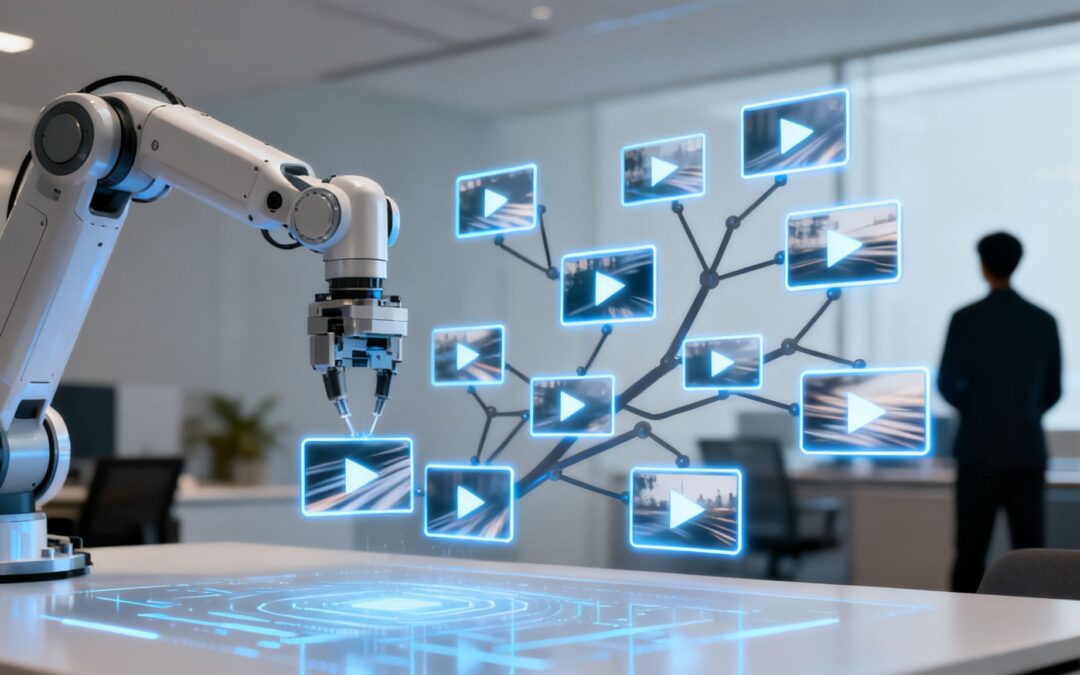
Picture a video strategy that runs itself. Not just scheduling posts or using a basic template, but a complete shift from manually doing every task to strategically overseeing an intelligent system. Autonomous AI agents are what make this possible, creating a video engine for your business that is always on, always personalizing, and always scaling.
Moving Beyond Automation to Autonomous Video
For years, marketing and content teams have leaned on automation to get repetitive tasks off their plates. Think scheduling social media posts or firing off email sequences. That’s traditional automation: a pre-set system following a strict set of rules. It’s helpful, but it isn’t smart. It can’t adapt, learn, or make a judgment call on its own.
Autonomous AI agents are the next evolution, especially for a dynamic medium like video. They are intelligent systems that manage end-to-end video workflows without constant human input, moving beyond simple, rule-based tasks and into goal-oriented operation.
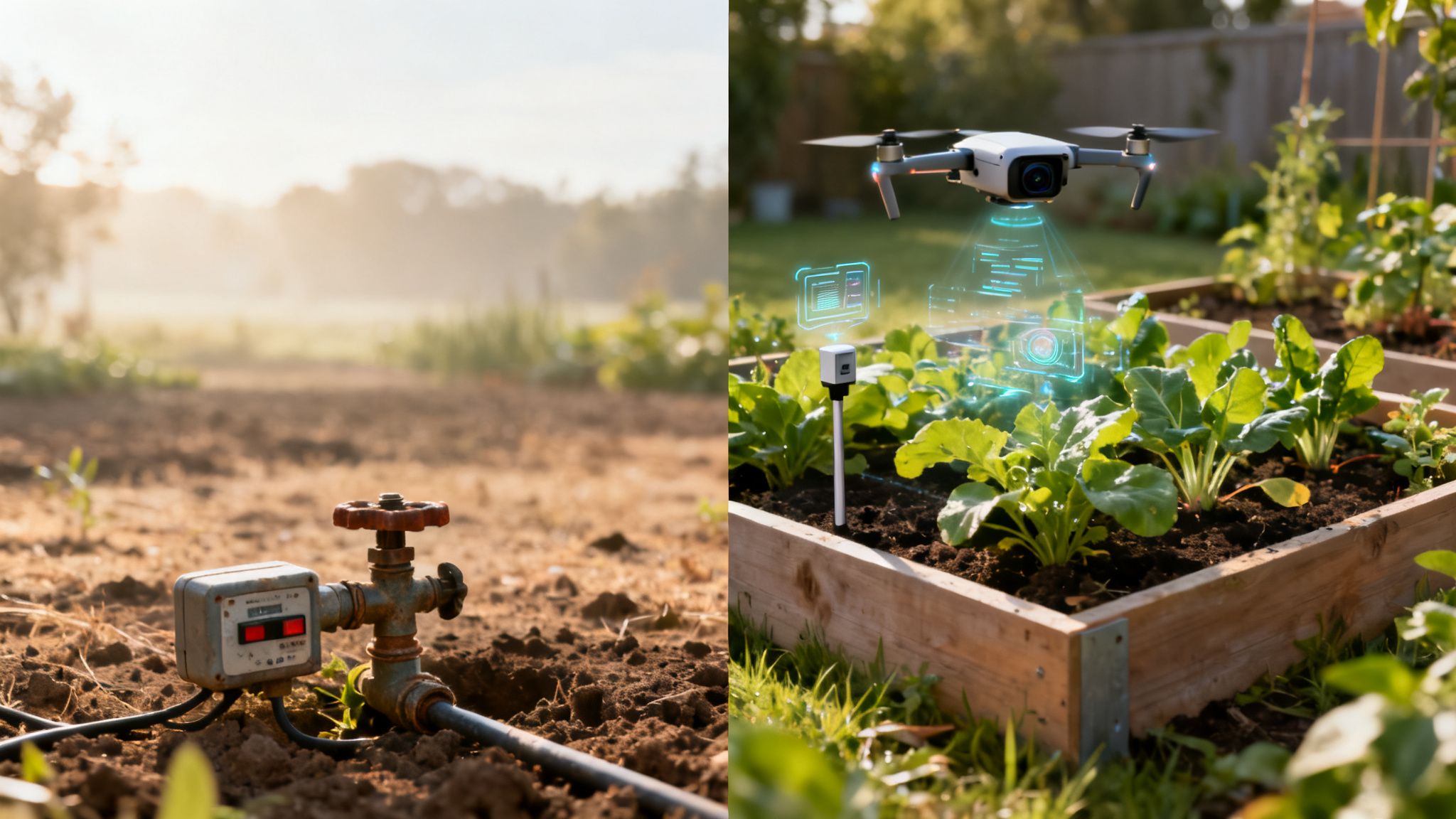
From Sprinklers to Smart Gardens
Here’s a simple way to think about the difference:
- Traditional Automation is a sprinkler system on a timer. It turns on at 6 AM for 30 minutes, period. It doesn’t care if it rained last night or if a heatwave is coming. It just follows its programming.
- An Autonomous AI Agent is a smart garden. It constantly analyzes real-time data from soil moisture sensors, checks the weather forecast, and even knows what different plants need. It then decides when, where, and exactly how much to water—all to achieve the goal of healthy plants with zero direct input.
That’s the core difference. Automation follows commands; autonomy achieves goals.
For your video strategy, this means you stop using a tool that just helps you make a video. Instead, you get an intelligent system that understands your goal—like boosting lead conversion—and then independently triggers, generates, and personalizes all the video content needed to hit that target.
To truly get there, creators need to tap into the power of AI for content creation, which sets the stage for these autonomous processes. These agents aren’t just another tool; they are intelligent partners that can manage entire video workflows from start to finish.
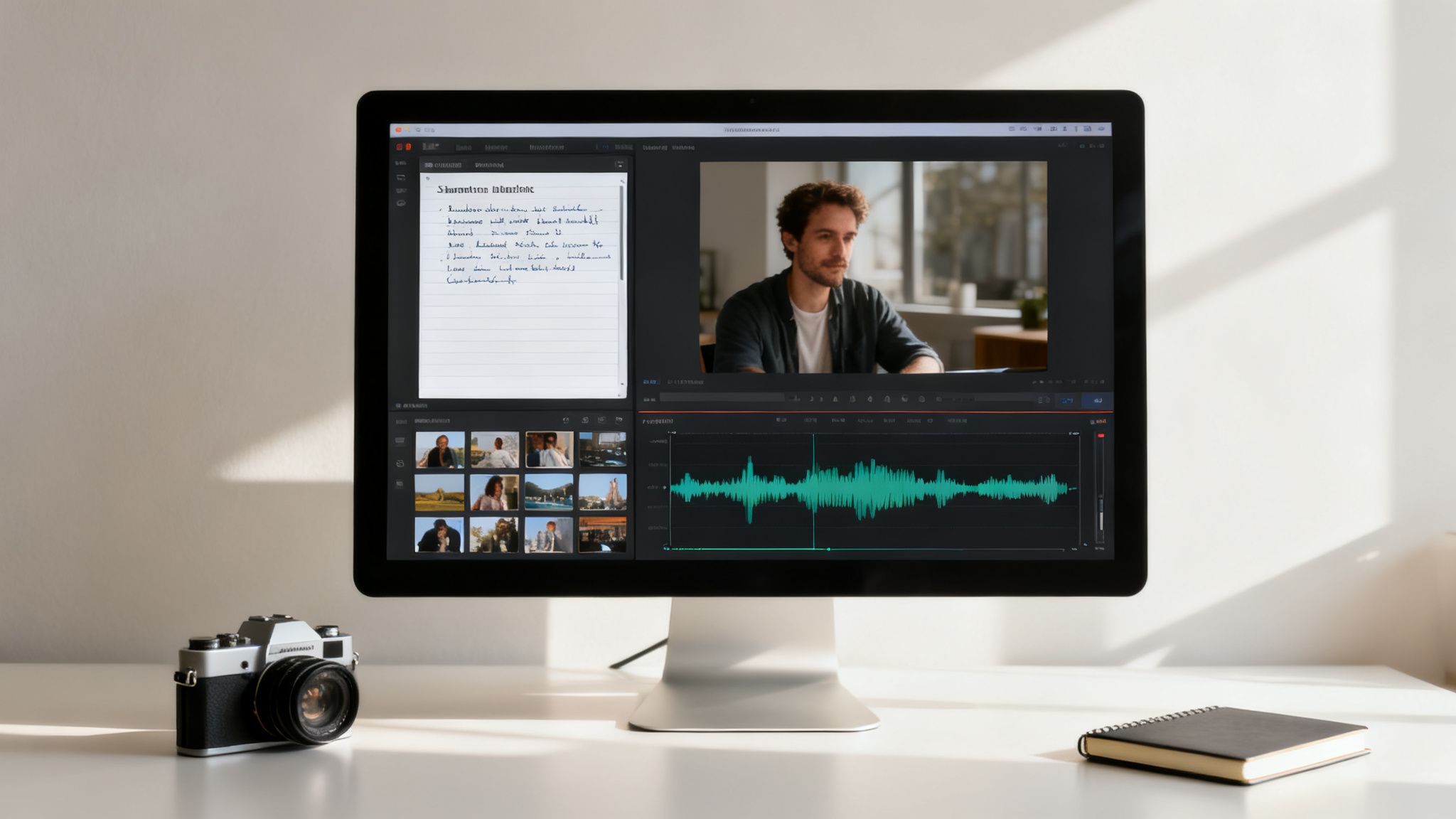
An autonomous video agent doesn’t just slap clips together based on a template. It can independently trigger video creation from real-time events, generate personalized scripts, source visuals, and even update existing video campaigns when data changes—all without you lifting a finger.
This capability gets your team off the production hamster wheel. Instead of sinking hours into creating dozens of slightly different sales videos, they can focus on big-picture strategy, creative direction, and analyzing the results of a system that scales their best ideas for them. Your team’s focus shifts from doing the work to guiding the work.
How Autonomous Agents Build Self-Running Video Workflows
So, how do these autonomous AI agents actually pull this off for your video strategy? It’s one thing to talk about the concept, but another to see how the gears turn. These agents operate in a continuous loop, driven by a goal, managing the entire video pipeline without you needing to check in constantly.
This isn’t just a small step forward; it’s a massive leap. The market for autonomous AI agents is expected to explode from $5.7 billion in 2024 to a staggering $48.3 billion by 2030. This isn’t just hype. The growth is fueled by a simple fact: these agents can tackle complex, multi-step jobs like video production way more efficiently than any old-school method.
The Trigger and Action Cycle
An autonomous video workflow doesn’t just kick off at 9 AM every Monday. It starts with a trigger. The agent is set up to watch specific data sources, and when a certain event happens, it springs into action. This makes your entire system proactive and event-driven, not reactive and manual.
Here’s a look at that continuous loop:
- Monitoring: The agent is always watching. It could be your product feed, your CRM, a customer support tool, or even live market data.
- Triggering: Something happens. A new lead pops into the CRM, a product’s price changes, or a customer hits a major milestone. This is the agent’s cue to start the video creation process.
- Execution: Now the agent gets to work, independently managing all the steps needed to create a final video that is relevant, timely, and aligned with its goal.
At its core, an autonomous video workflow is about connecting data-driven triggers to intelligent video creation. The agent acts as the central coordinator, turning raw data into a polished, ready-to-distribute video asset.
Coordinating the Entire Video Stack
Once that trigger fires, the agent becomes your automated project manager. It orchestrates every piece of the video production puzzle, building a complete video from the ground up, guided by its objective. If you want to get a better handle on how these self-running systems are built, it’s worth checking out different agentic solutions.
Here’s what an agent’s to-do list might look like:
- Script Generation: It writes a script specifically for that trigger. A new lead? The script could be a personalized welcome. A product update? It will detail the new features.
- Visual Asset Sourcing: The agent dives into your digital asset library to pull the right images, product shots, or branding elements.
- Voiceover and Audio Production: It can generate a synthetic voiceover from the script it just wrote and pick out background music that fits the video’s mood.
- Formatting and Branding: It ensures the video sticks to your brand guidelines, adds overlays like captions or CTAs, and formats it perfectly for different platforms (like square for Instagram or landscape for YouTube).
- Publishing and Distribution: Finally, it can push the video to the right channels or slot it into a marketing campaign, closing the loop on the entire workflow.
This entire sequence happens automatically, turning what used to be a multi-day, multi-person headache into an automated function that runs 24/7.
Manual vs. Automated vs. Autonomous Video
To really grasp the shift, it helps to see how far we’ve come. The table below breaks down the evolution from hands-on manual work to goal-driven autonomous systems for video creation.
| Capability | Manual Process (Human-Driven) | Traditional Automation (Rule-Based) | Autonomous Agents (Goal-Driven) |
|---|---|---|---|
| Initiation | Manual start for every video project | Follows a pre-set schedule or simple trigger | Proactively responds to real-time business events |
| Decision-Making | Human judgment at every single step | Follows a rigid “if-this-then-that” logic | Makes independent, context-aware decisions |
| Adaptability | Slow to adapt; requires new instructions | Cannot handle exceptions or new scenarios | Learns and adapts to new data and goals |
| Scalability | Limited by team size and available hours | Can scale repetitive tasks but is inflexible | Highly scalable and self-managing |
| Video Example | A video editor creates a new product video by hand. | A system automatically adds a new product name to a generic template video at 9 AM daily. | An agent detects a positive customer review, creates a testimonial video with it, and publishes it to social media. |
This comparison makes it clear: while traditional automation was about efficiency, autonomous agents are about intelligence and proactivity. They don’t just follow orders—they solve problems. This self-operating model is what unlocks true scalability in video marketing.
Putting Autonomous Video into Practice: Real-World Scenarios
Alright, theory is one thing, but seeing autonomous AI agents in action is where it all clicks. Let’s move past the abstract concepts and look at some real-world situations that marketing and growth teams tackle every day. These examples show how agents can take manual, time-sucking video tasks and turn them into smart, self-running systems.
This isn’t just about doing the old stuff faster. It’s about unlocking brand-new capabilities that were impossible with human teams alone. The speed and deep personalization these agents bring can give you a serious competitive edge.
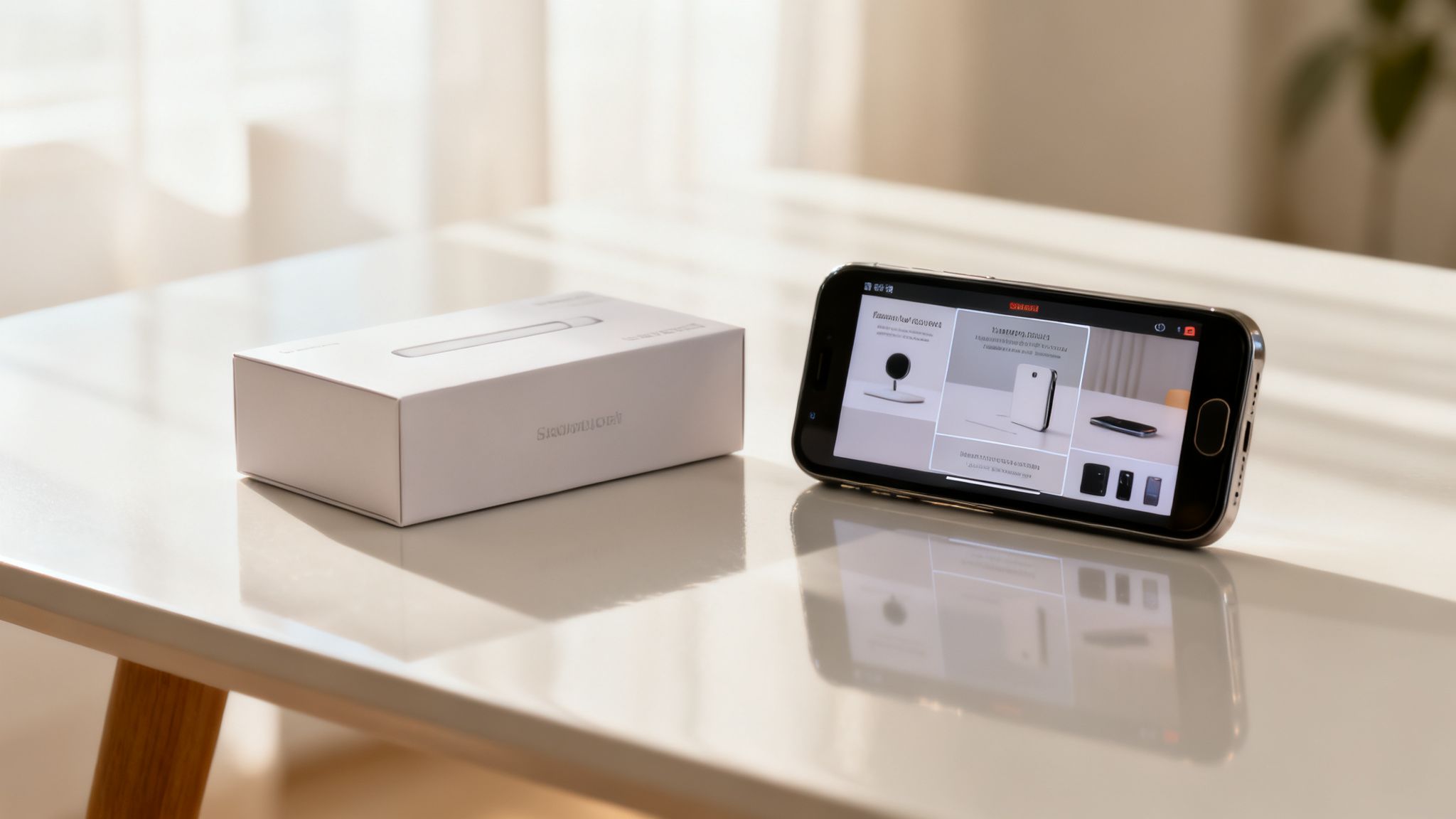
Scenario 1: The Always-On E-Commerce Video Engine
Imagine an online store with thousands of products. The catalog is always changing, and keeping promotional content fresh is a massive headache. An autonomous video agent turns this chaos into a smooth, hands-off operation.
- The Trigger: A new product is added to the Shopify or Magento product feed with images, descriptions, price, and specs.
- The Autonomous Process: The agent spots the new product instantly. It crafts a short script highlighting key features, pulls the product images, finds on-brand stock visuals, generates a synthetic voiceover, and assembles a snappy promo video formatted for social media.
- The Outcome: Within minutes of a product going live, a unique video is ready to post. No human intervention needed. This means every single product can get its own video asset, not just the bestsellers, without burning out your creative team.
Scenario 2: Hyper-Personalized Video Follow-Ups for Sales
In sales, personalization is everything. A generic follow-up email might get ignored, but a video made just for a specific lead? That gets attention. This is where an autonomous agent proves its worth.
- The Trigger: A new lead from a key target account enters your CRM after downloading a whitepaper.
- The Autonomous Process: The agent picks up this lead data. It then creates a personalized video that starts with the person’s name and company. The script could say, “Hi Alex, I saw you were interested in [Topic of Whitepaper]. At [Their Company], you might also find this feature valuable…” The video then shows a quick, relevant product demo.
- The Outcome: The prospect receives an email with a video made just for them. This kind of personal touch, delivered instantly and at scale, is something a manual team could never keep up with. It turns a cold lead into a warm conversation.
Scenario 3: The Self-Updating Video Campaign
Marketing and sales teams need assets that are always accurate. When prices or features change, an outdated video can cause confusion and even lose a sale. An autonomous agent ensures every video is always up-to-date.
- The Trigger: A product’s price gets updated in the company’s CRM, or a new feature is added to the product documentation.
- The Autonomous Process: The agent monitors these data sources. As soon as it sees a change, it automatically identifies all sales and marketing videos that mention the old info. It then re-creates the affected scenes with the new price or feature, re-renders the videos, and swaps out the old versions in your asset library.
- The Outcome: Your teams can share videos with total confidence, knowing they always have the latest information. This self-updating system eliminates version control nightmares and keeps messaging consistent everywhere.
These scenarios reveal a huge shift in thinking. The goal isn’t just to “make more videos.” It’s to build an intelligent video system that automatically reacts to business events, user behavior, and data changes.
This approach brings massive efficiency gains. In the wider world of marketing automation, AI agents can run entire campaigns, cutting down manual work by 30-60%. You can learn more about this marketing evolution by reading the autonomous AI guide on DigitalApplied.com.
By connecting data triggers to smart creation tools, you’re essentially building a scalable, self-operating content engine. This is where autonomous video workflows, like those you can build with Wideo’s Video Automation platform, turn powerful ideas into real-world business results.
The Strategic Impact on Your Growth Engine
Bringing autonomous video into your workflow is more than a tech upgrade. It’s a fundamental shift in how you operate, one that directly fuels your company’s growth. This approach gets your team off the hamster wheel of manual production and lets them become the strategic thinkers and creative innovators they were meant to be.
The impact comes down to four strategic pillars that completely change what’s possible with video.

The Four Pillars of an Autonomous Video Strategy
When you integrate autonomous AI agents into your video process, you unlock a level of performance that was simply out of reach before.
- Massive Scalability: Imagine creating a unique video for every single product in your catalog, every new lead in your CRM, or every customer milestone. Autonomous agents turn this from a pipe dream into reality, producing thousands of video variations without a proportional spike in time or cost.
- Unprecedented Speed: Markets shift in a blink. An autonomous system can react to these changes in minutes, not days. When a new feature goes live or you update pricing, agents can instantly generate and push out new video content across all your channels.
- Unwavering Consistency: Keeping brand consistency across hundreds or thousands of videos is a massive challenge for human teams. Autonomous agents, however, work from a single set of brand rules. Every video, from the script’s tone to the colors and logos, is perfectly on-brand.
- Deep Personalization: Generic, one-size-fits-all videos don’t cut it anymore. Autonomous agents excel at creating one-to-one video experiences at a one-to-many scale. They tap into customer data to generate videos that include a person’s name, mention their purchase history, or reference recent behavior to build a real connection.
Freeing Your Team for High-Impact Work
This new way of working completely changes the game for your creative and marketing teams. Instead of getting buried in repetitive production tasks, they’re elevated to a much more strategic role.
Their focus shifts from doing to directing. Instead of spending weeks building one campaign, they can design the logic for an autonomous system that runs hundreds of variations on its own. This gives them time to dig into performance data, tweak the agent’s goals, and come up with bigger, more creative ideas.
The real win with autonomous video isn’t just making more content. It’s about making smarter, more effective content that moves the needle on business goals like conversion rates and customer loyalty. You’re reallocating your team’s time from manual labor to high-impact strategic work.
The market is clearly moving toward these kinds of intelligent, self-operating systems. For any team focused on growth, using autonomous video workflows is no longer a sci-fi concept; it’s the practical next step. Platforms like Wideo’s Video Automation provide the tools to connect your data sources and build the smart rules that make this vision a reality.
Activating Your First Autonomous Video Workflow
Ready to move from theory to practice? Kicking off your first autonomous video workflow is more straightforward than you might think. The secret is to start small. Pinpoint a single, high-impact use case that can show real, measurable results fast.
Don’t try to overhaul your entire video strategy at once. Instead, zero in on one repetitive process that’s currently eating up time and resources. This approach lets you prove the concept, get the hang of how the system works, and demonstrate value before you go bigger.
Identify Your Starting Point
The best places to begin are tasks that are both valuable and recurring. When you build an autonomous system for these, you free up your team for more creative work almost immediately.
Here are a few high-impact scenarios perfect for your first autonomous agent:
- Personalized Sales Follow-ups: Automatically create a unique video for every new lead that hits your CRM. The agent can grab the lead’s name, company, and the product they were interested in to craft a one-to-one welcome video that gets their attention.
- Dynamic Renewal Reminders: For subscription businesses, an agent can generate personalized videos for customers whose contracts are about to expire. The video could highlight their usage stats, new features, and a clear call-to-action to renew.
- Automated Onboarding Sequences: When a new user signs up, kick off a series of short, helpful videos personalized to their role or the features they’re most likely to use, making the onboarding process feel more personal and effective.
The goal of your first workflow is to solve a specific business problem with a self-operating video solution. Choose a pain point where speed, personalization, and scale can make an immediate difference.
Leveraging the Right Foundation
You don’t have to build these systems from scratch. The most practical way forward is to use a platform designed to handle the heavy lifting of connecting data, setting rules, and rendering the video. This is where the concept of autonomous AI agents becomes a real, practical tool for your marketing team.
Platforms built for autonomous video workflows are what make this technology so accessible. For instance, Wideo’s Video Automation platform gives you the essential foundation. It lets you plug in your existing data sources—like a CRM, an e-commerce platform, or even a simple spreadsheet—and build the logic that tells the agent when to jump into action. If you’re looking for some inspiration on creating the video assets themselves, you’ll find great tips in our guide on how to make videos using AI.
This approach takes the abstract idea of an intelligent agent and makes it concrete. You aren’t just automating a task; you’re building a small, self-sufficient video engine that reacts to business events in real-time.
The Future of Content Is Self-Operating
We’re stepping into a new era where success isn’t defined by the size of your team, but by the intelligence of your systems. The rise of autonomous AI agents is moving us from manual, hands-on work to strategic oversight. It’s a shift from simply creating content to architecting self-operating content engines.
This change hits its stride with video, a medium perfectly suited for scale and engagement. Autonomous agents give us the power to generate, personalize, and distribute video at a speed and volume that used to be pure fantasy. They aren’t just another tool—they’re the whole workshop, running around the clock.
Embracing the Autonomous Advantage
The businesses that embrace this early will build a massive, lasting competitive edge. When you let autonomous agents take the reins of your video workflows, you’re creating smart systems that constantly work to pull in customers and drive real growth.
Let’s boil it down: autonomous AI agents are a huge leap beyond simple automation. When you pair them with a scalable format like video, you flip your content strategy from a cost center into a smart, self-operating growth driver.
This shift frees up your most important resource—your people. Instead of getting stuck in the grind of production, your team can focus on what they do best: strategy, creative thinking, and building real customer relationships. They become conductors of an orchestra, guiding the big picture instead of playing every single instrument.
Your Next Strategic Move
The question isn’t if you should automate video anymore. It’s which part of your strategy you’ll set to run on its own first. By starting with a high-impact area, like personalized sales follow-ups or dynamic product promos, you can build momentum fast and prove the value of a self-operating system.
You can start this journey today with autonomous video workflows, like those powered by platforms such as Wideo’s Video Automation. The future isn’t about working harder. It’s about building smarter, self-sufficient systems that keep your best ideas working long after you’ve called it a day.
Your Questions About Autonomous Video, Answered
As more teams consider building their own self-operating video systems with autonomous AI agents, a few common questions pop up. Let’s tackle them head-on.
Can Autonomous Agents Really Handle Creative Tasks Like Scriptwriting?
Yes, and that’s a huge part of what makes them so different from traditional automation. An agent doesn’t just grab pre-approved text and drop it into a video. Its real job is to generate unique, context-aware content from scratch.
When a trigger event happens—say, a new real estate listing goes live—the agent analyzes that specific data. It then writes a compelling script tailored perfectly to that moment. This script is then fed into a synthetic voiceover engine, making sure the audio track is perfectly in sync with the video’s purpose. It’s a move away from generic templates and toward truly one-of-a-kind narratives for every single video.
How Is This Different From Just Using a Video Template?
It’s a great question because on the surface, they can sound similar. But the difference is fundamental. Templates are static. They follow a rigid structure where you can really only swap out a few elements, like a name or a product image.
An autonomous agent, on the other hand, builds the video dynamically from the ground up. Based on its goal and the data it receives, it decides which scenes to use, what the script should say, which data points to feature, and what the call-to-action needs to be. The result is a far more personal and relevant video than a fixed template could ever produce.
Do I Need a Data Scientist on My Team to Set This Up?
No, you don’t. The whole point of modern platforms is to make this technology accessible to marketing and content teams, not just engineers.
Systems designed for autonomous video workflows have user-friendly interfaces that let you connect your data sources (like a CRM or e-commerce platform) and set up the rules that trigger video creation—all without touching a single line of code. The platform handles all the heavy lifting in the background, so your team can stay focused on strategy.
What Kind of ROI Should I Expect?
The return on investment is clear and comes from a few key places:
- Massive Time Savings: Think about all the hours your team currently spends on manual video production. Now imagine freeing them up for more strategic work.
- Increased Conversion Rates: Hyper-personalized videos that speak directly to a viewer’s needs and situation are simply more effective at getting people to take action.
- Total Content Scalability: You can finally achieve 100% video coverage for every product, service, or customer event—something that would be far too expensive or time-consuming to do manually.
- Improved Customer Engagement: Sending a relevant, timely video at every key moment in the customer journey creates a much more engaging and sticky experience.
When you put it all together, these benefits create a powerful growth engine that works for you 24/7, turning your video strategy into a proactive, self-operating machine.
Ready to activate your own self-running video engine? The Wideo Video Automation platform provides the tools to connect your data and build intelligent, autonomous video workflows that scale your message. Learn more and get started by exploring our video automation solutions.
Related posts:
 AI Integration A Practical Guide for Business Growth
 Ai data processing: Practical strategies for pipelines, tools, and compliance
 Unlocking AI Performance in Modern Video Creation
 From Manual Handoffs to Automated Video: A Practical Guide to AI Workflows
 Beyond Dashboards: A New Way to Compare AI Platforms for Scalable Communication
 AI in Video: The Ultimate Marketer’s Playbook for the 2026 AI Landscape


